When you start packing, the first question is probably "how much can I take?". Baggage rules for air travel depend on the airline, on whether the flight is domestic or international, and on the fare you bought. Knowing the rules in advance helps you avoid surprise charges at the airport and get through security faster. In this guide we explain the basics of airline baggage rules, from cabin bags to the liquids rule, step by step.
Your baggage allowance is on your ticket
The document that decides how much baggage you can take is your ticket. The allowance is shown in the fare rules and on your e-ticket, either in kilograms (kg) or as a number of pieces (PC). Even on the same flight, two passengers who bought different fares can have different allowances. Some basic fares include only a small cabin bag, while more complete fares include checked baggage in the price.
You can see the baggage allowance of a ticket bought from Traveland Turizm while choosing your flight and on your e-ticket. After booking you can also open your ticket on the Manage booking page with your PNR code and surname.
What is a cabin bag?
A cabin bag is the bag you take on board with you and place in the overhead locker or under the seat in front of you. Airlines set both a weight limit and a size limit for cabin bags. Because these limits vary by airline and fare, the best approach is to check the rules of your own ticket before you fly.
When packing your cabin bag, keep in mind:
- Size and weight: bags over the limit may be taken at the gate and put in the hold, and an extra charge may apply.
- Personal item: many fares also allow a small personal item, such as a handbag or laptop bag, in addition to the cabin bag.
- Valuables: money, jewellery, medicines, electronic devices and important documents should always stay with you in your cabin bag.
- Power banks: power banks and spare lithium batteries can usually only be carried in the cabin, not in checked baggage.
Checked baggage
Checked baggage is the suitcase you hand over at check-in and that travels in the aircraft's hold. Your allowance may be defined as a total weight, such as "20 kg", or as a number of pieces, such as "1 piece". Under the piece system each suitcase also has its own weight limit.
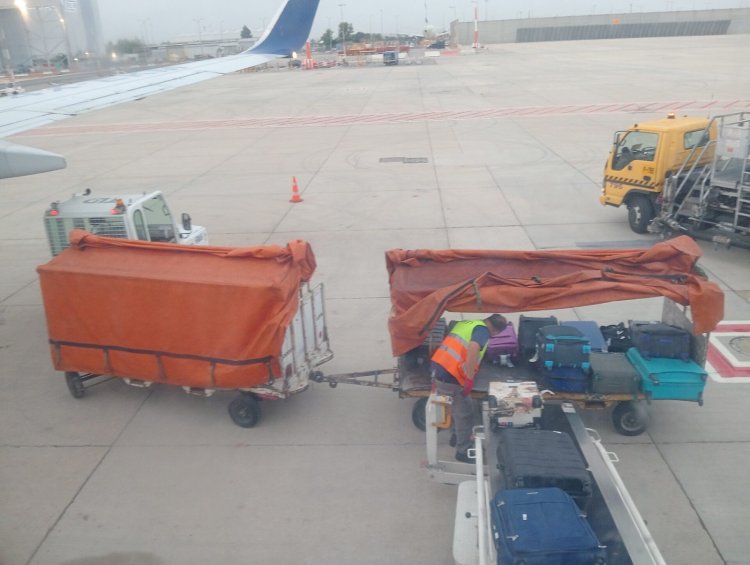
Excess baggage fees at the airport are usually higher than extra baggage bought in advance. If you think your bags will go over the limit, it is more economical to arrange extra baggage before the flight. Our call centre can help you with this.
When packing your suitcase:
- Weigh your suitcase with a luggage scale before leaving home.
- Put a label with your name, phone number and email address inside and outside the suitcase.
- Pack fragile items well, and never put valuables in checked baggage.
- If you have more than one suitcase, make sure each one meets the piece and weight limits.
The liquids rule: 100 ml limit
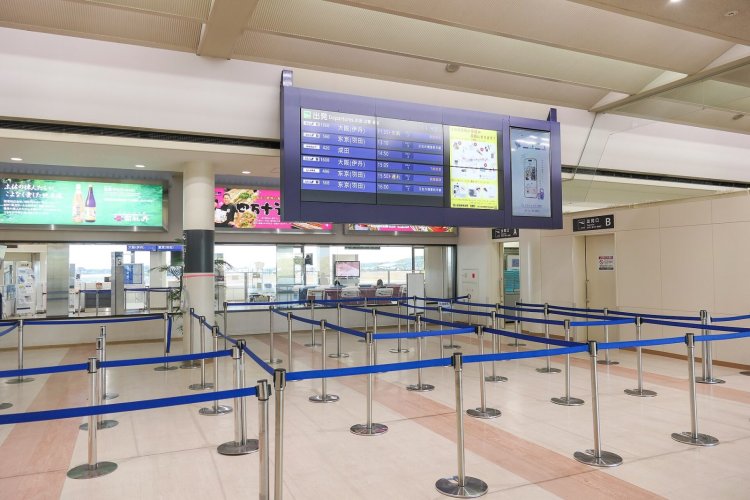
Liquids are the most common reason people are stopped at security. At most airports the same basic rule applies to liquids in your cabin bag: each container can hold at most 100 ml, and all containers must fit in a resealable, transparent bag of about 1 litre. This bag is taken out of your cabin bag and shown separately at security.
The rule covers not only water and drinks but also perfume, shampoo, cream, lotion, toothpaste, gels, sprays and similar products. If a container is labelled with a volume larger than 100 ml, it is usually not accepted even if it is half empty.
- Medicines and baby food: exceptions are usually made for medicines and baby food needed during the journey. Carrying a prescription or doctor's note makes things easier.
- Bought after security: drinks bought in airport shops after security can usually be taken on board. On connecting flights, check the rules of the second airport.
- Large bottles: put bottles over 100 ml in your checked baggage.
Some airports have new scanners that relax these rules, but because this varies from airport to airport, packing to the 100 ml rule is always the safest option.
Items you cannot take in the cabin
For security reasons, some items cannot be carried in the cabin. Knives, scissors and other sharp objects, tools, and flammable or explosive substances are in this group. Other items, on the contrary, may only be carried in the cabin; power banks and spare lithium batteries are the main examples. The exact list can vary by airline and country, so if you are unsure about an item, ask before you travel.
Special baggage: sports equipment, musical instruments, pushchairs
Special items such as bicycles, skis, golf bags or large musical instruments are often subject to separate rules and may need to be declared in advance. Pushchairs are carried free of charge by many airlines and can be used up to the aircraft door. If you have special baggage, finding out whether it is accepted and what it costs when you buy your ticket will save you trouble at the airport.
If your baggage is lost or damaged
If your baggage does not arrive or is damaged, go to the airline's baggage office before leaving the airport and file a report. Keep the reference number you are given; tracking and any compensation will be handled through it. Do not throw away your baggage receipt (the part of the bag tag given to you) until your journey is over.
Contact us about your baggage allowance
To find out the baggage allowance of your ticket, extra baggage options or special baggage rules, contact the Traveland Turizm call centre on +90 850 304 03 58 or our WhatsApp line. To prepare for your trip, see our Passenger Guide, and for check-in see our Online Check-in page.